*** WORK IN PROGRESS ***
" There was a king reigned in the East:
There, when kings will sit to feast,
They get their fill before they think
With poisoned meat and poisoned drink.
He gathered all that sprang to birth
From the many-venomed earth;
First a little, thence to more,
He sampled all her killing store;
And easy, smiling, seasoned sound,
Sate the king when healths went round.
They put arsenic in his meat
And stared aghast to watch him eat;
They poured strychnine in his cup
And shook to see him drink it up:
They shook, they stared as white's their shirt:
Them it was their poison hurt.
—I tell the tale that I heard told.
Mithridates, he died old. "
- A.E Housman
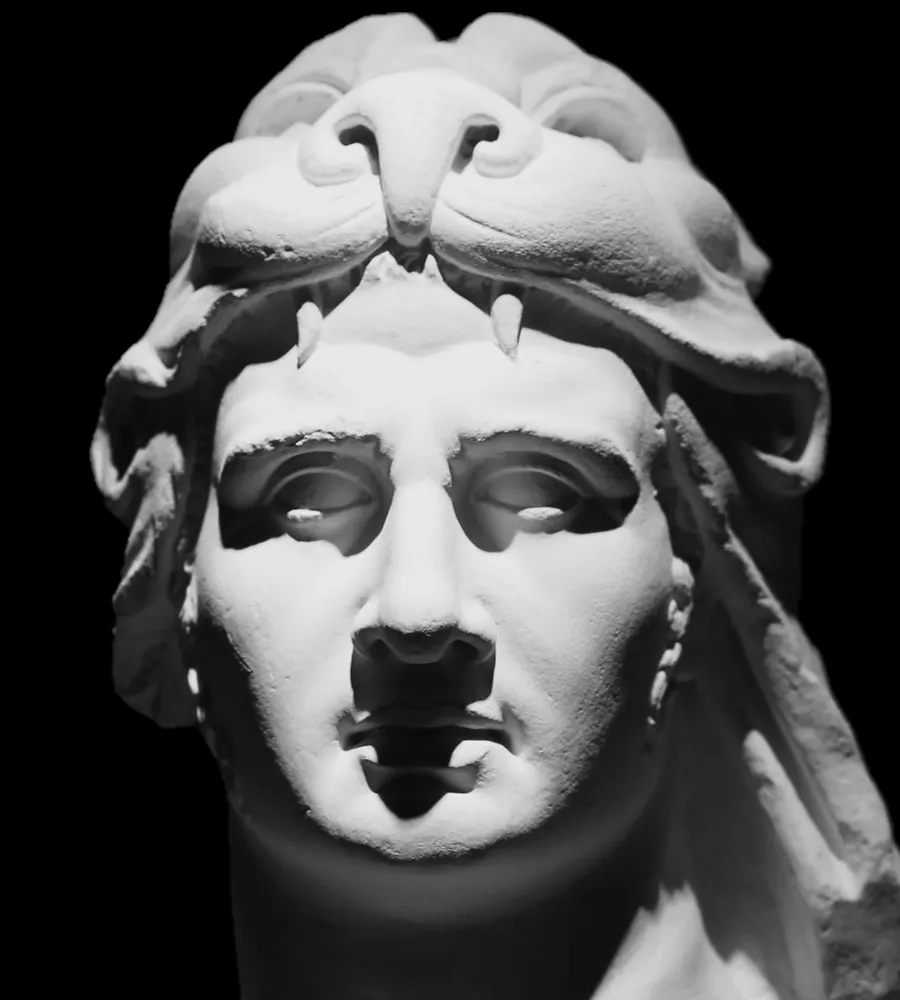
Before it became an empire, the Republic of Rome lived in terror of King Mithridates VI Eupator of Pontus. But long before he became the feared King of Pontus, as a young prince, his path to the throne was fraught with difficulties. Not just from external threats but threats within the royal court and even within his own family. This is the story of how a young prince lost everything and then fought and won it all back, then brought fear to his betrayers and to the door of the Republic of Rome itself.
Family ties
Mithridates VI was the eldest son and heir of King Mithridates V Euergetes (whom, for simplicity's sake, we will refer to as "Mithridates the Elder" going forward) and his wife Laodice VI of Cappadocia. At around the age of 12, on the cusp of manhood, Mithridates the Younger lost his father to a mysterious and unidentified poisoner.
His father, Mithridates the Elder, The King of Pontus, despite having a preference for peace and being skilled at diplomacy and ruling pragmatically, had no shortage of enemies: The Republic of Rome, formerly staunch allies of Pontus, was now the rising power of the Mediterranean. In its ascendency, and with a new generation of ambitious statesmen looking to make their names as Generals, they looked for new lands to conquer to expand the republic and enhance their own glory. The old alliance Pontus had with Rome could no longer be taken for granted. Neighbouring kingdoms such as Bithynia and Cappadocia, who were traditionally tied through diplomacy and marriage, grew restless as the alliance Pontus had with the Romans became less assured. But, despite the threats from without, the poisoner who murdered Mithridates the Elder was thought to be somebody closer, somebody within his own court.
In the year 120BC, at a great banquet Mithridates the Elder was suddenly taken ill and on his death-bed he declared that until his eldest son was able to take the throne, his wife Laodice VI was to rule in his stead. Laodice ruled the Kingdom of Pontus for over 7 years (120BC - 113BC) and during that time came to favour her younger son Chrestus, disinheriting Mithridates the Younger against the express wishes of her husband, wishes he had made with his dying breath. During her reign it became clear that, as Regent, Laodice VI intended to get rid of her eldest son and clear the path to make her more pliable son Chrestus the next King of Pontus.
Death or Exile
Having been witness to the machinations of the royal court of Pontus since birth, Mithridates the younger knew that for his younger brother to ascend the throne, as his mother wishes, he had to die. He fled the palace to escape the plots of his mother and went into hiding in the countryside. Under complete anonymity he lived among mountain tribesmen and hunters, he gained exceptional hunting and riding skills and developed a physical toughness and endurance he could never have achieved living in comfort as a resident of the Royal palace.
Embedded within the populace of the villages and tribes, he learned the languages and customs of the people under his fathers, and now his mothers domain. During this time he continued his education and became fascinated with poisons. He experimented with wild fowl and learned that poisons, when taken in small enough doses, do not kill and can actually help the consumer develop immunity to their effects if taken in moderation over a long enough timeline. A practice still known to this day as "Mithridatic Poisoning".
He learned from local gossip that his disappearance from the palace was a source of concern within the Regency and that bounties had been offered for news of the missing prince. He also gathered that his mothers rule was not popular; She was suspected of being involved in her husbands death, seen as weak for allowing the true heir to escape, foreign-leaning for her links to her homeland, Cappadocia. The people of Pontus did not think highly of the Queen Regent. Knowing that it was only a matter of time before he was discovered living in hiding and sensing that the opportunity had arrived to retake his place as his fathers heir, Mithridates the Younger began to plan his return.
*** WORK IN PROGRESS ***
DISCLAIMER NOTICE: While this article is based on a real life historical figure and closely aligns with the known facts, this is ultimately a work of historical fiction: There are several gaps in the known history of Mithridates the Great that are unknown and at times I have used creative licence to fill in this story. For instance, the means with which he retook the throne is not known. Similarly, The Romans loved to talk up their bogie-men and Mithridates was certainly one of them, so even what we largely consider 'known' about these people and these times could be embellished or exaggerated. Some of the sources used in the gathering of this story are entirely contradictory, but I didn't want that to get that get in the way of telling a good story so where required I have chosen what makes for the best story and at times have just made stuff up to fill the gaps. Why not dig into the sources yourself via the links below to separate the man from the myth:
https://worldhistoryedu.com/mithridates-vi-eupator/
https://www.worldhistory.org/Mithridates_VI/
https://en.wikipedia.org/wiki/Mithridates_VI_Eupator
https://en.wikipedia.org/wiki/Laodice_(sister-wife_of_Mithridates_VI_of_Pontus)